

 RSS Feed (xml)
Read More......
The fibrinolysin test is used to determine the presence of a fibrinolytic enzyme which can dissolve fibrin clots. The fibrinolysin (a.k.a., staphylokinase) produced by most strains of Staphylococcus aureus, as well as, the streptokinases produced by virulent group A b-hemolytic Streptococcus (Streptococcus pyogenes) are examples of fibrinolytic enzymes, but are antigenically and enzymatically distinct from each other. The group C streptococci also produce an antigenically distinct fibrinolytic streptokinase and it is this particular enzyme that has been exploited commercially as the source of a thrombolytic (clot-busting) enzyme for clinical use in humans.
Procedure: Two tubes will be prepared, one without any bacterial inoculum and the other with S. epidermidis to demonstrate the effects of a non-fibrinolysin producer. These tubes will be compared to the results obtained with the S. aureusstrain, following prolonged incubation of the coagulase test, which will serve as an example of a positive fibrinolysin producer.
In the first tube, CaCl2 (40 mmol/cc plasma) is added to ~0.5cc of platelet-rich plasma (~ >150 x 106 platelets/cc plasma) to produce a fibrin clot. The second tube is prepared identically, except that a generous loopful of the S. epidermidis strain is resuspended in the CaCl2-treated plasma. Thoroughly homogenize the inoculum with the loop and incubate the tube at 37o C for one to four hours. Examine the tube at 30 minute to hourly intervals for the first couple of hours for the presence of a clot by tipping the tube gently on its side.
Reincubate the tube overnight to see if the clot subsequently lyses. In strains that produce fibrinolysin, the clot will be slowly digested.
Designed & Maintained by David M. Rollins
Copyright © 2000, D.M. Rollins and S.W. Joseph
Revised: August 2000
URL: http://life.umd.edu
Thursday, March 12, 2009
article : Fibrinolysin Test

article : Elek Test
Elek Test: Antitoxin which has been impregnated in a strip of sterile filter paper is placed on the surface of the agar medium after a heavy inoculum is streaked at right angles to the position of the paper strip, and allowed to incubate for 24 hours. If the organism is toxigenic, a visible line of Ag-Ab precipitate will form.Designed & Maintained by David M. Rollins
Copyright © 2000, D.M. Rollins and S.W. Joseph
Revised: August 2000
URL: http://life.umd.edu
article : Coagulase Test
platelets/cc plasma). The citrate is an anticoagulant that is added to avoid autoclotting.
Procedure: Add a generous loopful of the organism to be tested to a tube of citrated rabbit plasma. Thoroughly homogenize the inoculum with the loop and incubate the tube at 37o C for one to four hours. Examine the tube at 30 minute to hourly intervals for the first couple of hours for the presence of a clot by tipping the tube gently on its side. A test that shows any degree of clotting within 24 hours is considered coagulase positive.
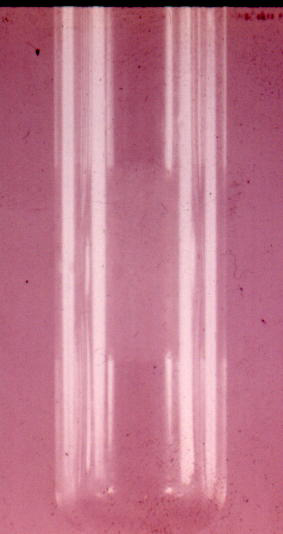
Reincubate the tube overnight to see if the clot subsequently lyses. In strains that produce fibrinolysin, the clot will be slowly digested. This illustrates the importance of reading the coagulase results within 24 hours. Thereafter, the lack of clotting could be a false negative reaction with a coagulase-positive strain.
Designed & Maintained by David M. Rollins
Copyright © 2000, D.M. Rollins and S.W. Joseph
Revised: August 2000
URL: http://life.umd
article : Know the Catalase Test
Catalase is an enzyme found in most bacteria. It catalyzes the breakdown of hydrogen peroxide to release free oxygen.
2 H2O2 ---------> 2 H2O + O2
Read More......Procedure: Add one drop of H2O2 to a glass slide with a loopful of growth from each culture to be tested. The development of an immediate froth of bubbles is indicative of a positive catalase test. The test is performed on a blood-free medium.
Designed & Maintained by David M. Rollins
Copyright © 2000, D.M. Rollins and S.W. Joseph
Revised: August 2000
URL: http://life.umd.edu
article : CAMP Test
CAMP is an acronym for Christie, Atkins, Munch, Petersen, the discoverers of this phenomenon.
This procedure is used to confirm that a bacterial strain is a Group B streptococci by production of a characteristic zone of hemolysis when grown in proximity to S. aureus.
Procedure:
- Using an inoculating needle or the edge of a loop, streak S. aureus in a straight line down the center of a BAP.
- Streak strains of suspected streptococci at right angles to the S. aureus 2-3 cm apart.
- Be careful to streak the streptococcal strains close to, but not touching, the S. aureus streak. Label and incubate at 37o C.
Results: Observe for signs of enhanced hemolysis in the shape of an "arrowhead" where the S. aureus and streptococcal growth are in the nearest proximity.
Designed & Maintained by David M. Rollins
Copyright © 2000, D.M. Rollins and S.W. Joseph
Revised: August 2000
URL: http://life.umd.edu
Search by Google





